
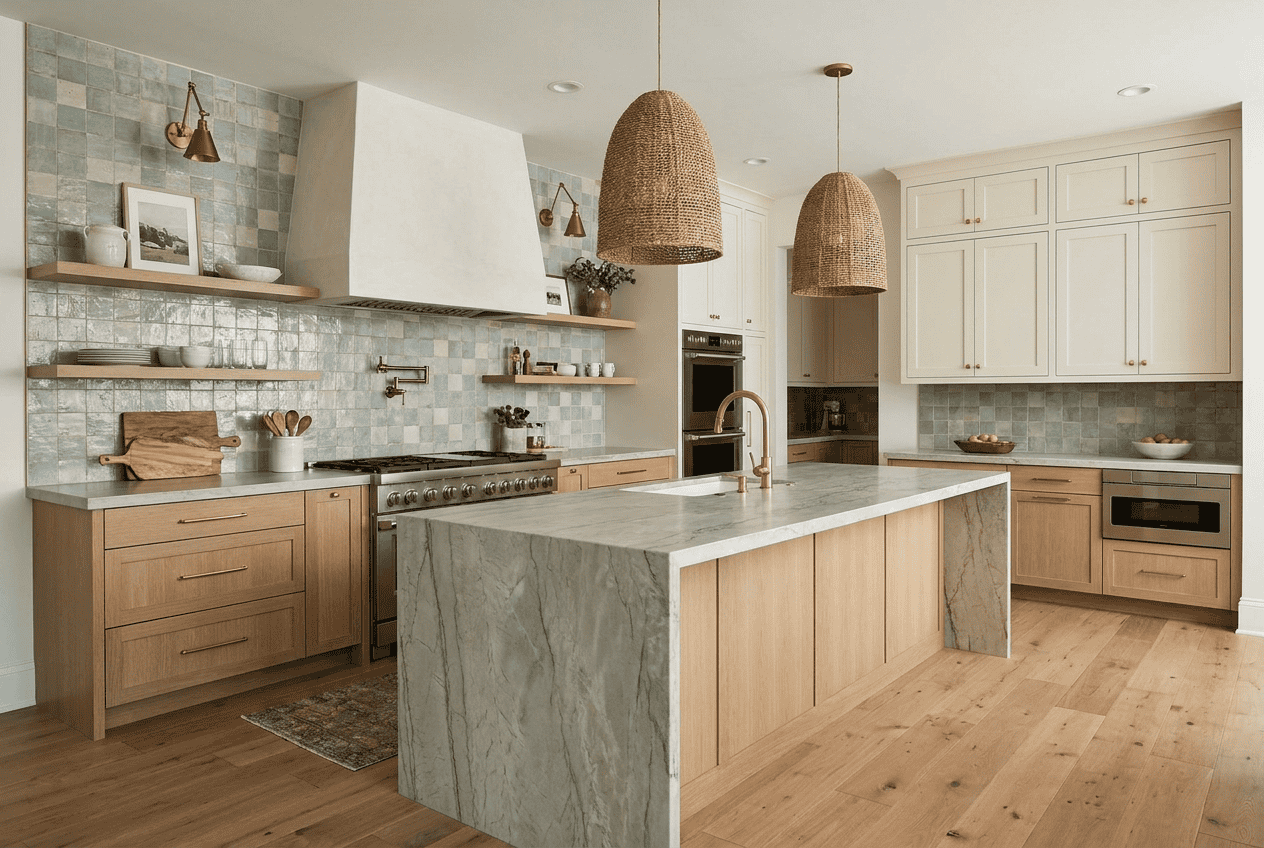
A backsplash can make a kitchen look finished or make an otherwise good remodel feel strangely disconnected. The best kitchen backsplash ideas are not picked from a tile board in isolation. They work because the material, color, pattern, and scale make sense beside the cabinets, countertops, flooring, lighting, and architecture already in the room.
A beautiful tile is not automatically the right tile. In practice, the backsplash usually works best when it supports the strongest elements in the kitchen instead of trying to become another competing focal point.
Kitchen Backsplash Ideas Start With the Whole Kitchen
Treat the backsplash as part of the room, not a decorative layer added at the end. It is a functional surface that can create contrast, add texture, or quietly connect the surrounding materials, but it needs a job.
Start With the Finishes You Are Least Likely to Change
Cabinets, countertops, flooring, major appliances, and architectural elements should lead the decision. Those surfaces occupy more visual space and cost far more to replace than backsplash tile.
If the countertop material has strong marble veining, for example, adding another highly patterned surface directly behind it is usually the wrong call. Let the stone carry the movement and use the backsplash to calm the overall look.
Decide Whether the Backsplash Should Blend In or Become a Focal Point
A neutral backsplash does not have to disappear. Subtle glaze variation, handmade edges, interesting grout, or a different tile layout can add depth without introducing another dominant color.
A statement backsplash works better when the rest of the kitchen is restrained. Trying to make the island, range hood, countertops, cabinet color, floor, and backsplash all compete for attention rarely ends well.
View Samples in the Actual Kitchen
Tile samples belong in the room where they will be installed. Hold them against the countertop and cabinetry, then look again under natural light, undercabinet lighting, and evening lighting.
Paint, wood, stone, and glossy surfaces reflect color onto each other. A white tile that looks neutral in a showroom can read gray, cream, or even slightly green once it is surrounded by the actual kitchen finishes.
Backsplash Tile and Slab Materials: Ceramic, Porcelain, Stone, Glass & More
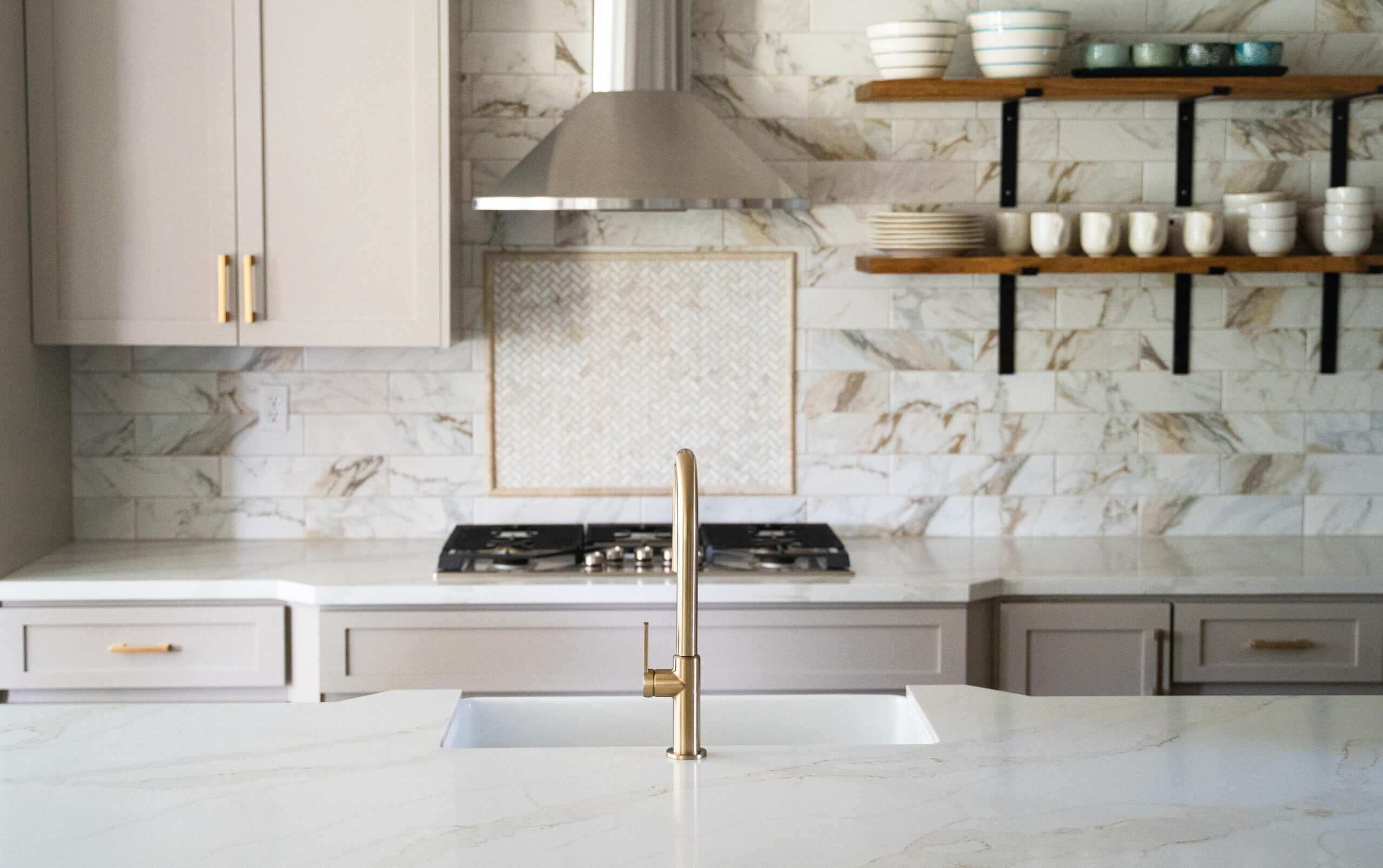
There is no single best backsplash material. There are materials that make sense for a particular kitchen and materials that create unnecessary maintenance, visual noise, or installation headaches.
Ceramic and Porcelain Backsplash Tile
Ceramic and porcelain are hard to beat when homeowners want a durable backsplash with broad design flexibility. Both materials come in matte, glossy, textured, solid, and patterned finishes, and tile backsplashes can range from affordable to highly custom.
Porcelain stoneware is especially practical around a sink, stove, or cooktop because it is dense and resistant to moisture. Under porcelain tile standards, porcelain is defined by water absorption of 0.5% or less, which helps explain why it performs well in splash-prone areas. If you want a backsplash that is easy to maintain and care more about performance than rarity, porcelain is usually the stronger choice.
Natural Stone and Marble
Natural stone brings variation that manufactured tile cannot fully reproduce. Marble can look elegant and timeless, but that elegance can also fight with busy countertops when the veining is strong.
Stone also needs more attention. The Natural Stone Institute’s stone care guidance notes that sealing can improve stain resistance but does not make stone stain-proof, and some stones may not require sealing at all. Homeowners who want stone should choose it because they like the variation enough to accept the extra care, not because it looked good in one inspiration photo.
Slab Backsplashes for a Seamless Premium Look
A slab backsplash can make a kitchen feel calmer because there are fewer grout lines breaking up the wall. Marble, quartzite, quartz, and large-format porcelain are all used for this look.
Execution matters more here than with ordinary tile. Vein direction, seams, outlet locations, and how the slab meets the countertop can either create a clean composition or expose every planning mistake. Premium materials do not rescue weak layout decisions.
Zellige and Other Handmade Tile
Zellige and other handmade tiles rely on variation. Slightly uneven edges, changes in thickness, irregular glaze, and glossy texture are part of the appeal.
If someone wants every joint perfectly uniform, handmade tile is the wrong material. If they want warmth and visible craftsmanship, those irregularities create exactly the character that machine-made tile often lacks.
Glass, Mosaic, Metal, and Other Specialty Materials
Glass tiles reflect light and can brighten a darker wall, while mosaic tile works well when the design needs finer detail. Metal, including stainless steel, can make sense near heavy cooking areas because it handles heat and splashes well.
Specialty materials are usually stronger in controlled doses. Covering every backsplash wall with a highly reflective glass mosaic or aggressively patterned surface can turn an interesting material into visual clutter. Wallpaper can work as a decorative alternative away from hard-use zones, but it would not be my first choice for a permanent wet or cooking area.
White, Black, Neutral, or Colorful? Choosing a Backsplash Color
Color decisions should start with undertones. “White,” “gray,” and “beige” are not specific enough once those colors sit beside paint, wood, stone, brass, and artificial light.
White Kitchen Backsplash Ideas for White Cabinets
A white kitchen backsplash with white cabinets works when the whites relate to each other. A cool blue-white tile beside creamy cabinetry can look accidental.
Instead of chasing an exact match, use texture, glaze variation, or a slightly warmer neutral to create separation. Matching grout keeps the wall quiet; contrasting grout makes the tile pattern much more visible.
When a Black Kitchen Backsplash Works
A black kitchen backsplash can look sharp in a modern kitchen, especially beside white cabinetry, warm wood, or lighter countertops. It needs enough light.
In a dim room with dark floors and dark cabinets, another large black surface can flatten the space. Glossy tile or reflective stone helps, but lighting should be considered before the material is ordered.
Neutral and Earth-Toned Backsplashes With Wood Cabinets
Wood cabinets already bring warmth and natural variation. Cream, taupe, beige, soft green, and warm stone tones usually complement wood more easily than a stark cool gray.
The point is not to match the wood. It is to avoid introducing a competing undertone that makes the cabinetry or floor look unexpectedly orange, yellow, or dull.
Use Grout and Metal Finishes to Reinforce the Palette
Grout is part of the color scheme. A contrasting grout line turns each tile into a graphic shape; a matching grout lets the surface read more as one field.
The same applies to metal. Brass adds warmth, while black or stainless details create a different level of contrast. Those small elements can pull a backsplash into the rest of the kitchen without forcing the tile itself to match everything.
Subway Tile, Herringbone & More: Choosing Pattern, Layout, and Scale
Pattern is where many otherwise sensible backsplash ideas go too far. A better rule is to make either the material or the layout interesting—not both at maximum volume.
Why Subway Tile Still Works
Subway tile is not outdated. Weak versions of it are.
A basic glossy rectangle with predictable grout can feel generic, but oversized formats, handmade surfaces, deeper colors, vertical installation, or quieter grout give the same basic shape a different character.
Herringbone Kitchen Backsplash Ideas
Herringbone creates movement, which makes it useful on a simple wall behind a range or between restrained cabinets. It also creates more visual activity and demands more precise installation.
If the countertop already has dramatic movement, herringbone can be too much. A simpler layout will usually age better.
Vertical Stack, Geometric, Mosaic, and Patterned Tile
- Vertical stack: clean and modern, with more height than a traditional running bond.
- Geometric or patterned tiles: effective when surrounding materials are simple.
- Mosaic: useful for smaller-scale detail, but easy to overuse.
- Strong cement or vintage-inspired patterns: best treated as a deliberate focal point rather than background texture.
Match Tile Scale to the Kitchen
Small tile creates more grout lines and more visual information. Large tile or slab material creates broader, quieter surfaces.
A large island, tall cabinetry, broad range hood, or expansive wall can make tiny patterned tiles feel fussy. Scale should respond to the room, not just to what looks interesting on a twelve-inch sample board.
How Architectural Style Should Influence Your Kitchen Backsplash
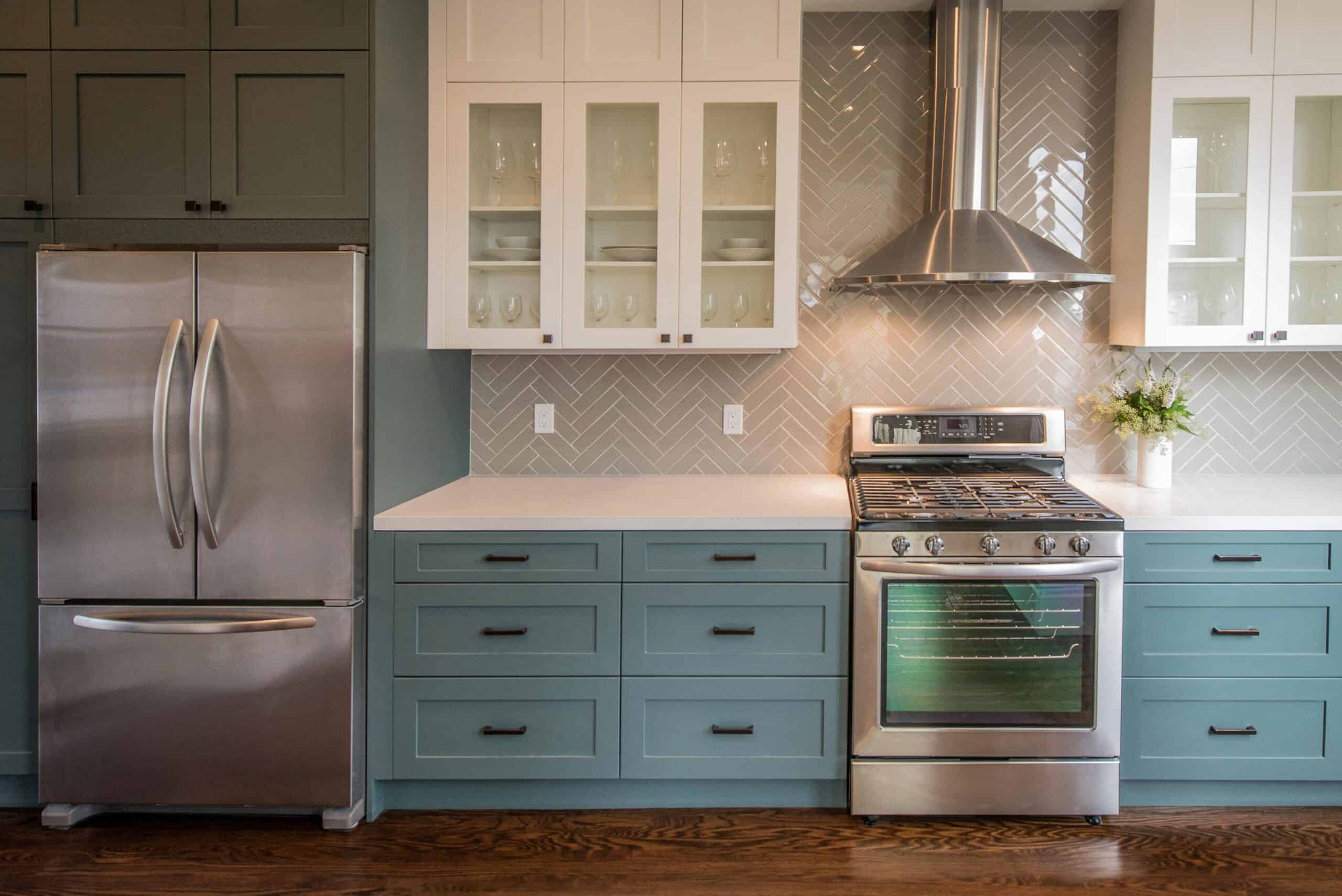
A backsplash should look like it belongs in the house. Chasing a fashionable material that fights the cabinetry, windows, shelves, or proportions of the room is a fast way to make a remodel feel dated.
Traditional and Transitional Kitchens
Traditional and transitional spaces usually handle marble, ceramic, handmade tile, restrained herringbone, and quieter mosaics well. Subtle variation adds depth without turning the wall into the main event.
Modern and Organic-Modern Kitchens
Modern kitchens benefit from fewer visual breaks: slab stone, large-format porcelain, vertical tile, minimal grout, and matte surfaces. Organic-modern rooms can carry more natural texture, but the layout should still feel controlled.
Farmhouse, Craftsman, and Vintage-Inspired Kitchens
Handmade ceramic and restrained color often fit these styles better than highly polished, aggressively geometric materials. The tile should reinforce the cabinetry and architecture, not create a themed imitation of them.
How to Coordinate the Backsplash With Cabinets, Countertops, Flooring & Lighting
Most backsplash mistakes start when homeowners compare a tile to the countertop, decide the colors “match,” and stop there.
A kitchen is read as one composition. Cabinets, countertops, floor, island, paint, lighting, hardware, and backsplash all sit in the same field of view. The backsplash has to earn its place among those elements.
Coordinate Backsplash Ideas With Cabinet Color
White cabinets give you more freedom, but they also expose undertone mistakes quickly. Warm-white cabinetry beside cold gray tile can make both finishes look worse. Painted blue or green cabinets often work better with quieter backsplash materials because the cabinet color is already doing enough.
Wood cabinets need a different approach. Do not try to match the wood grain in tile. Pick up the warmth or contrast it intentionally. A soft stone, cream ceramic, or restrained white can give the wood room to read naturally.
A designer can test cabinet color, floor stain, paint, brass hardware, and backsplash samples together before anything is ordered. That is especially useful when the island uses a second finish, because the backsplash has to work from more than one sightline.
For the broader palette, carry the same undertone logic across cabinet color, flooring, wall paint, metal finishes, and backsplash materials so the room reads as one coordinated scheme.
Let the Countertops Set the Level of Visual Movement
Countertops usually carry more visual weight than the backsplash because they run horizontally through the room and wrap the island. Start there.
If the countertops have strong quartz, marble, or quartzite veining, the backsplash generally needs less movement. Plain does not mean boring; a simple tile with texture or glaze variation can keep the stone from fighting with another pattern on the wall.
If the countertops are quiet, the backsplash can do more. Handmade tile, herringbone, or a patterned surface becomes easier to control because there is less competition.
The specific countertop material matters too. Natural marble, quartz, quartzite, and more uniform surfaces behave differently visually, which is why backsplash selection should follow—not precede—the countertop decision. Compare veining, color variation, edge profile, and maintenance needs before locking in the backsplash so the wall treatment supports the surface rather than competing with it.
Check the Backsplash Against the Floor
The floor gets ignored because it is not directly touching the backsplash. That is a mistake.
A warm wood floor can make a cool gray backsplash feel colder than expected. A stone floor with strong movement can turn patterned tile into one surface too many. Bring backsplash samples down to eye level with the floor visible in the same room.
Exact matching is unnecessary. Repeating an undertone once or twice is usually enough to make the kitchen feel coordinated.
Account for Natural and Artificial Light
Light changes material more than most sample boards reveal. Glossy glass or ceramic reflects daylight and undercabinet light. Matte tile absorbs more of it. Black stone can look rich in a bright kitchen and flat in a poorly lit one.
Look at samples in the morning, later in the day, and with the actual task lighting turned on. Pay attention to windows, pendant locations, and dark corners around the stove or sink.
Full-height slab stone can look spectacular in one kitchen and overpower another. The material is not changing; the room around it is.
Installation Details That Make a Kitchen Backsplash Look Custom
A premium backsplash can still look cheap if the installation layout was never resolved. Tile cuts, edges, outlet locations, grout joints, and termination points are visible every day.
Decide Where the Backsplash Starts and Stops
Do not let the installer invent the stopping point once tile is already going on the wall.
The backsplash may align with the cabinets, the countertops, a window, open shelves, or another architectural break. Around a stove or cooktop, a full-height section can make sense. On a short side wall, wrapping the tile just a few inches often looks accidental.
Grout, Substrate, and Wet-Zone Details Matter
Grout color and width change the appearance of the entire installation. Narrow matching grout keeps a wall calm; darker grout makes the pattern much more graphic.
Backsplashes can often be installed over clean, dry drywall, while wetter or higher-moisture conditions may justify a moisture-resistant substrate. The material near the sink and cooking area should also tolerate splashes and routine cleaning.
Peel-and-stick tile can work for a quick update, but for a permanent remodel it is usually the wrong benchmark. If you are already opening up a kitchen, install the finish meant to stay.
Plan Outlets, Edges, Trim, and Slab Seams Before Installation
Outlet placement can ruin an otherwise clean slab or patterned wall. The same goes for tiny tile slivers at corners or exposed unfinished edges.
Plan cuts, trim, seams, and veining before material is installed. With marble slabs and handmade tile, installer judgment becomes even more visible because there is less room to hide awkward decisions.
How to Choose the Right Backsplash for Your Kitchen Remodel
The perfect tile is not the tile that looks best by itself. It is the material that will suit the kitchen, handles the required functionality, and still looks intentional after the rest of the room is installed.
Use This Order to Narrow Your Backsplash Ideas
Start with architecture, then cabinetry, countertops, flooring, and lighting. After those decisions are stable, choose backsplash material and color, then pattern and scale, then grout and installation details.
That order prevents the backsplash from forcing compromises everywhere else.
What Should You Discuss With Your Remodeler Before Choosing?
Ask how the backsplash will terminate, what substrate is planned, where outlets and switches will land, how exposed edges will be finished, how grout will affect the pattern, and where slab seams will fall.
A remodeler should be able to discuss those details before installation starts. When comparing kitchen remodel contractors, ask whether the team resolves layouts, materials, and key features during design instead of leaving those decisions for construction; Two Aspens describes that coordination as part of its design phase. If the conversation stays at “Which tile do you like?” it is missing the decisions that make the finished kitchen look deliberate.
If you are comparing teams, ask how each one resolves those details before tile is ordered. Two Aspens Builders can coordinate the backsplash with cabinetry, countertops, lighting, and the installation plan as part of a full kitchen remodel.

0 Comments